
How Can Restaurant Patio Canopies Expand Your Dining Space?
Restaurant patio canopies expand dining space by turning exposed outdoor areas into more comfortable, dependable seating. By providing shade and protection from light rain and changing weather, a commercial canopy can help restaurants serve more guests outside, extend patio use across more hours and seasons, and create an inviting dining environment that supports revenue opportunities.
For restaurant owners, adding tables is only valuable when guests actually want to sit at them. That is why thoughtful patio coverage can make such a difference. AllStar Canopy specializes in commercial canopies, awnings, architectural sunshades, and custom metal fabrication designed around the needs of commercial properties. A restaurant patio canopy can be customized to complement the building while helping owners make better use of available outdoor space. From evaluating coverage needs to selecting durable materials, the goal is to create an outdoor dining area that looks intentional, functions well, and provides a better experience for guests and staff.
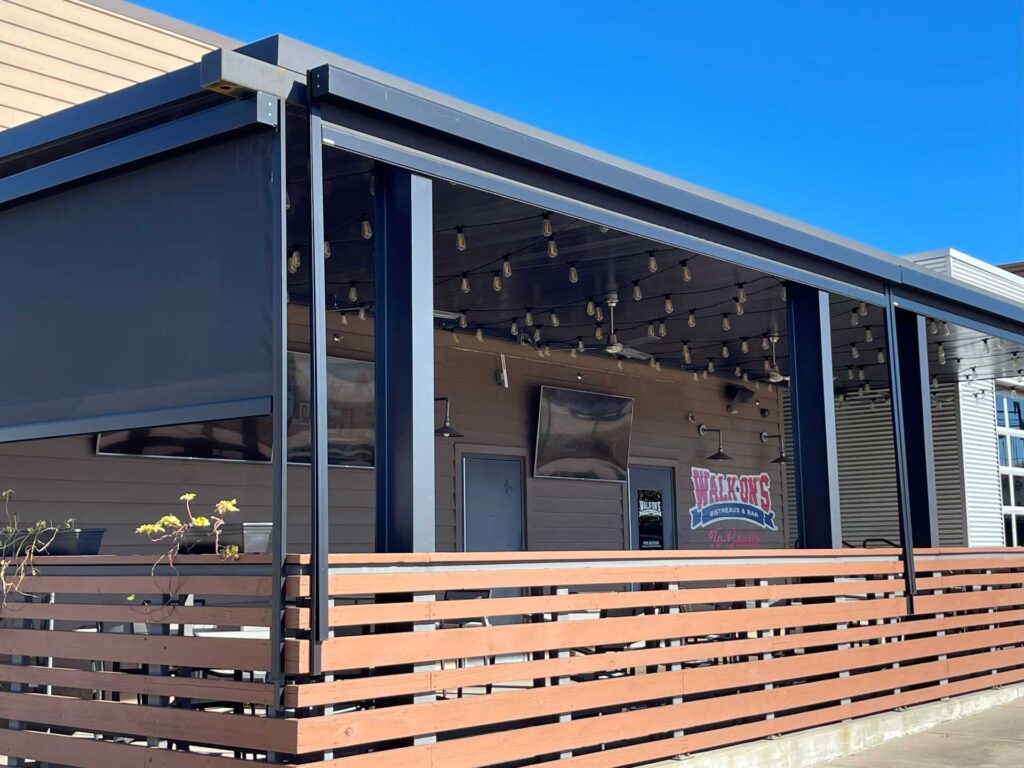
Why Covered Outdoor Dining Can Be a Smart Restaurant Investment
Outdoor dining is not simply an aesthetic upgrade. For many restaurants, patio seating represents meaningful capacity and revenue potential.
TouchBistro’s 2026 Patio Season Guide, based on research with The Harris Poll involving more than 1,200 full-service restaurant operators in the U.S. and Canada, found that more than 81% of operators offer outdoor dining. Patios account for an average of about 20% of total sales, while some operators report that outdoor dining generates 25% to 49% of sales.
Consumer demand supports the investment, too. OpenTable reported in 2025 that 55% of Americans prefer dining outdoors when the weather is nice.
How Does a Restaurant Patio Canopy Increase Seating Capacity?
A patio canopy can make existing outdoor square footage more practical for regular table service.
An uncovered patio may technically hold tables, but direct sun or unpredictable weather can leave those seats empty. Adding a commercial canopy helps transform the same area into dining space that guests are more likely to request and employees can more consistently serve.
Depending on the property, restaurants may be able to use canopies to cover:
- Sidewalk or storefront seating areas
- Courtyards and patios
- Outdoor bar seating
- Waiting areas near restaurant entrances
- Larger outdoor spaces used for groups and private events
This can be particularly valuable during peak periods. More usable tables may allow a restaurant to accommodate additional reservations or walk-in guests without expanding the interior footprint.
Restaurant owners should still verify local zoning, building, fire, accessibility, and outdoor dining requirements before adding seating or permanent structures. The National Restaurant Association notes that outdoor dining projects can involve permits covering seating capacity, accessibility, construction details, utilities, liquor service, and other considerations.
Do Patio Canopies Make Guests More Likely to Sit Outside?
Yes, research indicates that shade and coverage are important factors in outdoor dining decisions.
Toast’s 2026 restaurant outdoor seating research found that 54% of respondents were more likely to choose a restaurant with outdoor dining when weather permits. Even more telling for restaurant owners considering a canopy, 62% preferred a covered, screened-in patio, while 48% identified umbrellas or covered shade as the most important factor when choosing outdoor seating.
A well-designed canopy can improve the patio experience by providing:
- Relief from direct sunlight
- Protection from light rain
- A more defined and comfortable dining environment
- Greater confidence when guests request outdoor seating
- A visually cohesive extension of the restaurant
Coverage does not eliminate every weather concern, especially during severe weather, extreme heat, or high winds. It does, however, make a patio more usable under many everyday conditions.
Can a Commercial Canopy Help Extend Patio Season?
A canopy can help restaurants use their patios during more hours and weather conditions, although climate and canopy design will determine how much the usable season expands.
The National Restaurant Association recommends planning outdoor dining areas for changing weather and specifically identifies awnings and other covered structures as options for providing shade and rain protection.
Restaurant operators can further improve a covered patio by considering features such as:
- Strategic shade coverage: Study where afternoon sun hits tables and prioritize those areas.
- Lighting: Proper lighting helps keep the space inviting after sunset.
- Air movement: Where codes and canopy design allow, fans can improve comfort during warmer periods.
- Heating: Approved outdoor heaters may help extend patio use during cooler weather.
- Weather-resistant furnishings: Choose tables, chairs, and finishes designed for outdoor exposure.
A canopy becomes the foundation of a more adaptable outdoor dining environment rather than simply an overhead cover.
What Business Benefits Can Restaurant Patio Canopies Provide?
The biggest potential benefit is making existing property work harder for the restaurant.
TouchBistro reports that 30% of operators had expanded patio seating capacity in the previous year, while 39% planned to add private events to their patio strategies. That suggests outdoor spaces are increasingly being treated as operational assets rather than decorative extras.
For restaurants, a professionally designed canopy may contribute to several business goals:
- More usable tables: Covered areas can increase practical seating capacity.
- Improved guest comfort: Shade can make outdoor meals more enjoyable.
- Stronger curb appeal: Architectural canopies can reinforce the restaurant’s visual identity.
- More event opportunities: Covered patios may provide attractive settings for parties, happy hours, and group dining.
- Greater patio consistency: Weather protection can reduce the number of times minor weather changes make outdoor tables undesirable.
There can also be a competitive advantage. If nearby restaurants offer exposed patios while yours provides a comfortable covered dining area, guests may perceive your patio as the more dependable choice.
What Should Restaurants Look for in a Patio Canopy?
A restaurant canopy should balance appearance, durability, coverage, and compatibility with the property’s architecture.
Before choosing a design, restaurant owners should consider the size of the dining area, sun exposure, drainage, traffic flow, entrances, local requirements, and how servers will move between indoor and outdoor tables.
Material selection matters as well. Commercial metal awnings and other durable canopy systems can provide a permanent architectural appearance while standing up to the demands of a commercial environment. Custom metal fabrication also allows the structure to be designed around the building rather than forcing the restaurant to adapt to a generic, one-size-fits-all product.
The best canopy should feel like a natural extension of the restaurant itself.
Frequently Asked Questions About Restaurant Patio Canopies
Are restaurant patio canopies worth the investment?
They can be, particularly when a canopy turns an underused outdoor area into dependable seating. Industry research shows patios can represent a meaningful portion of restaurant sales, making comfortable outdoor capacity potentially valuable.
Do customers prefer covered restaurant patios?
Many do. Toast found that 62% of surveyed diners preferred a covered, screened-in patio, and 48% identified shade from umbrellas or a covered area as the most important outdoor dining factor.
Can a restaurant patio canopy protect customers from rain?
A properly designed canopy can provide protection from light and moderate rain within its covered area. Performance depends on the canopy design, drainage, wind conditions, and the severity and direction of the weather.
Do restaurants need permits to install a patio canopy?
Requirements vary by jurisdiction and project. Restaurants should check applicable building, zoning, fire, accessibility, outdoor dining, and other local regulations before construction.
Expand Your Restaurant’s Outdoor Dining Potential
A restaurant patio canopy can do more than provide shade. It can turn overlooked outdoor square footage into a comfortable extension of the dining room, create a stronger first impression, and help restaurants make better use of their property.
AllStar Canopy provides commercial canopy, awning, sunshade, and custom metal fabrication solutions designed to meet the practical and architectural needs of commercial properties.
Ready to expand your dining space with a restaurant patio canopy? Contact AllStar Canopy today to discuss a custom solution for your property.